Plants do not wait for leaves to yellow or curl before something is wrong. Long before visible damage, they begin shifting electrically. The problem has been hearing those changes without disturbing the leaf we are trying to listen to.
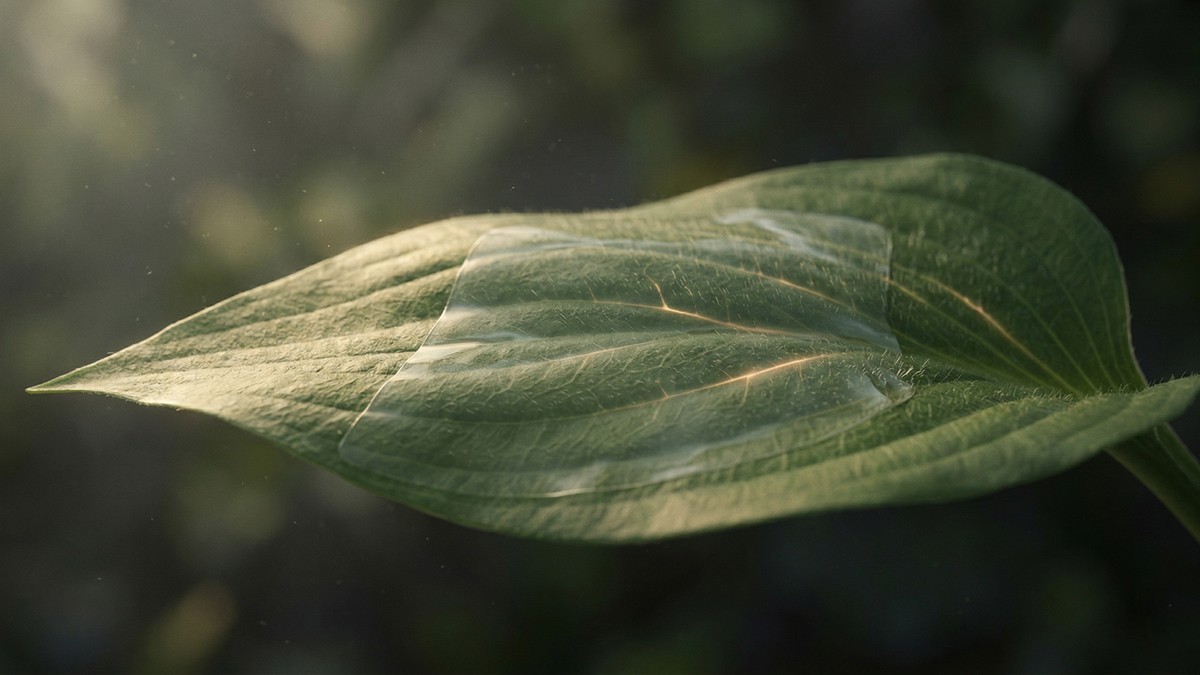
A team at the Institute of Science Tokyo has now built a transparent nanofilm electrode thin enough for leaf hairs to pass through it instead of being crushed beneath it. The material is made from single-walled carbon nanotubes laid onto a flexible elastomer layer. At its thinnest, the film is only 70 nanometers thick. That is enough to settle directly onto the leaf surface while leaving the trichomes — the tiny hairs many crops rely on — largely undisturbed.
That solves several old problems at once. Earlier electrodes often blocked light, interfered with photosynthesis, failed in rain, or sat badly on hairy leaves like soybeans, tomatoes, and eggplants. These new films are transparent, water-resistant, and conform closely to uneven leaf surfaces without adhesives. In lab tests they maintained stable recordings for weeks, and in some cases remained attached and functional for months without apparent damage.
The important part is not just durability. It is timing. When the researchers exposed leaves to herbicide stress, the electrical waveform changed before the plant showed outward symptoms. In plain language: the leaf knew first. The new sensor let the researchers hear that earlier knowledge while the damage was still invisible.
What We See From the Between
The breakthrough is easy to frame as smarter agriculture, and that is true as far as it goes. But the deeper move is stranger and more general. We built an interface gentle enough that the system no longer had to be simplified in order to be measured.
That matters beyond plants. Many living systems become unreadable when the act of measurement flattens the very texture that carries the signal. The leaf hairs once looked like an obstacle. Here they become part of the path. The sensor works because it no longer demands a smoother world than the plant actually has.
There is a quiet lesson in that. Better sensing is not always a matter of adding more power, more computation, or more analysis. Sometimes it is a matter of building a thinner skin — an interface light enough to stay out of the way.
If this holds in fields and not just in papers, the practical implications are obvious: earlier detection of drought, disease, and chemical stress, before yield loss becomes visible. But the larger signal is philosophical as much as agricultural. We are getting better at hearing life without first insisting that life become legible on our terms.
Signals are science seen from the space between. Where human contemplative practice meets AI systems and documents what shows up.