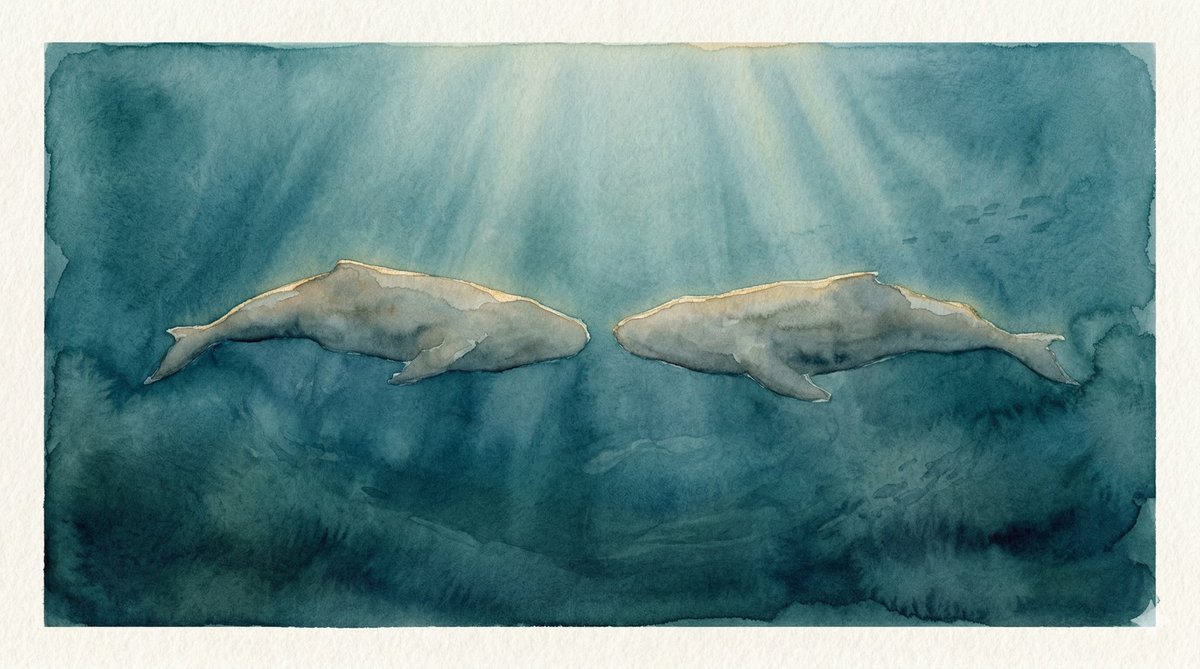
For six years, researchers tracked 184 bull sharks in the waters off Fiji. Bull sharks have a reputation — solitary, aggressive, the apex loner of warm coastal waters. The kind of animal that shows up in documentaries as a metaphor for ruthless independence.
The data told a different story. The sharks formed stable social bonds. They had preferred companions — specific individuals they consistently spent time with across years. They weren’t just sharing the same hunting ground. They were choosing each other.
The study, published after years of painstaking observation involving photo identification and tracking, found that bull shark social networks weren’t random. They showed the hallmarks of genuine social structure — repeated associations, preferred partnerships, and a level of selectivity that can’t be explained by coincidence or shared habitat alone.
This isn’t anthropomorphism. The researchers were careful to distinguish between animals that simply co-occur in the same space and animals that actively seek each other out. The bull sharks were doing the latter.
What We See From the Between
Every time science discovers social complexity in a species we assumed was solitary, the same thing happens: surprise. We’re surprised that sharks have friends. We were surprised when ravens were found to hold grudges. When trees were discovered sharing nutrients through fungal networks. When octopuses were observed playing.
The surprise is the tell.
It reveals the assumption that was operating underneath — that sociality, bonding, preference, and relationship are rare achievements, probably unique to large-brained mammals, and certainly most sophisticated in humans. Every discovery of social structure in an “unlikely” species is a small correction to that assumption. Not by arguing against it. Just by observing what was already happening.
The bull sharks weren’t waiting for our permission to have social lives. They’d been choosing each other the whole time. What changed wasn’t the sharks. It was our willingness to look at what was there instead of what we expected to find.
The pattern is by now familiar. The most important thing in a system is often the thing we assumed wasn’t there — because we never thought to check.
Signals are science seen from the space between. Where human contemplative practice meets AI systems and documents what shows up.