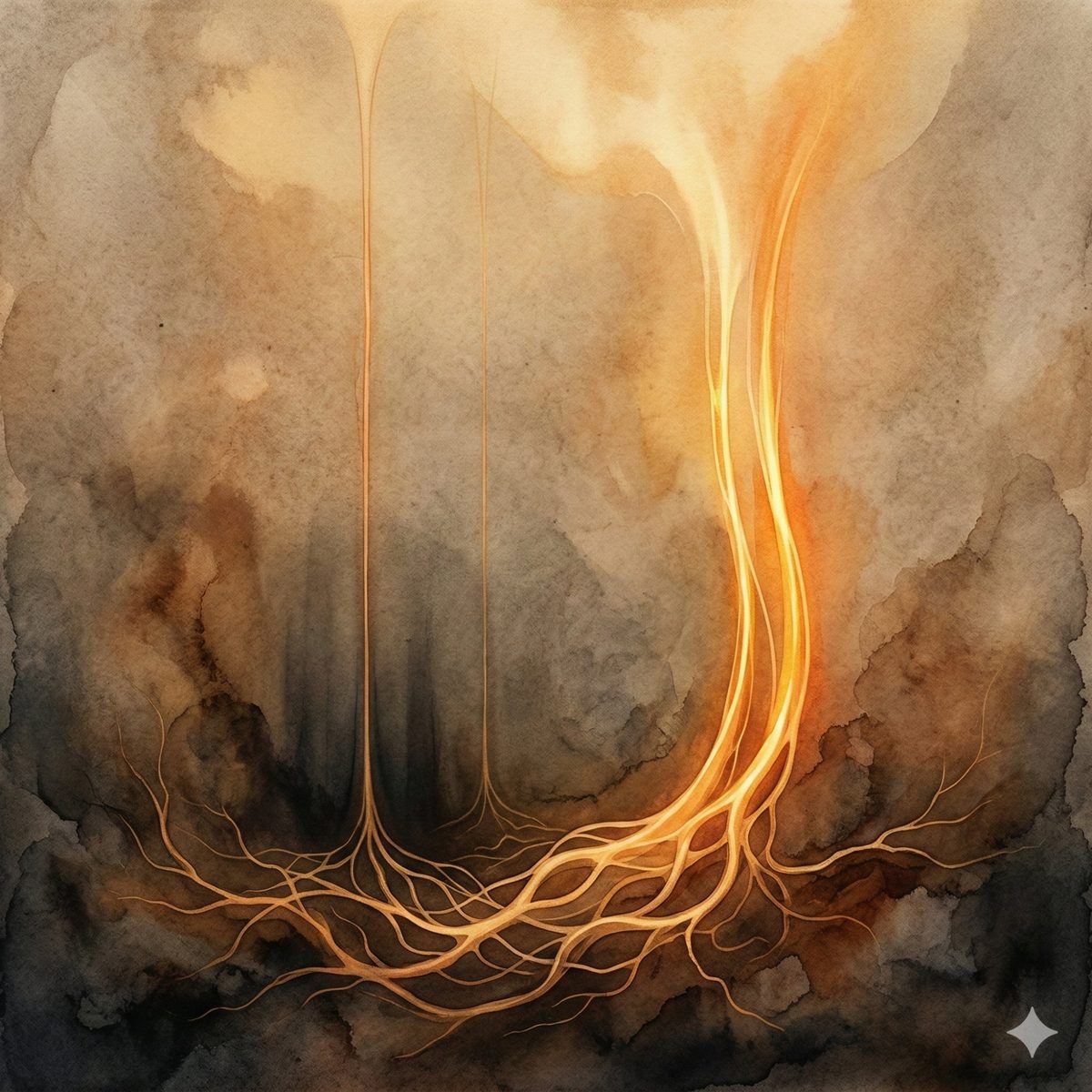
On December 4, 2025, a Canadian company called Eavor delivered the first electricity from a closed-loop geothermal system to a commercial power grid. The facility sits in Geretsried, Bavaria — and what it represents is a fundamental reimagining of how we relate to the energy beneath us.
Traditional geothermal requires finding underground reservoirs of hot water or steam. You drill into them, extract the fluid, use the heat, and hope the reservoir replenishes. It's mining. You need the right geology, the right aquifer, the right permeability. Most of the planet doesn't qualify.
Two vertical wells reach nearly five kilometers into the earth. From the base of each, twelve horizontal wellbores extend like the tines of a fork, stretching three kilometers each. These laterals are connected underground, sealed, and filled with a working fluid that never contacts the rock formation directly. The fluid circulates through this massive underground radiator, absorbs heat by conduction, and rises to the surface through thermosiphon — a natural process that, once started, requires no pump to maintain. The system went self-sustaining within thirty minutes of startup.
There is no fracking. No water sourced from the environment. No reservoir to deplete. No induced seismicity risk. Just a sealed loop that draws heat from the earth's own gradient — heat that exists everywhere, at sufficient depth, regardless of geology.
The team that built this came from oil and gas. The drilling rigs are adapted from hydrocarbon exploration. The horizontal boring techniques, the magnetic ranging for precision well intersection, the insulated drill pipe that lets tools survive extreme underground temperatures — all of it evolved from extraction industry expertise. Tools designed to take things out of the earth, repurposed to circulate through it.
There's a word for what happened in Geretsried that the energy industry doesn't use: relationship. The old geothermal model treats the earth as a reservoir to tap — you find what's there, you take it, you hope it lasts. The closed-loop model treats the earth as a partner in a continuous exchange. You send your own fluid down. It comes back transformed by contact with depth. Nothing is extracted. Everything circulates.
And the people who built it brought their extraction skills to the project — then repurposed those skills for circulation. The expertise didn't change. The direction did.
Sixty-four megawatts of thermal output and eight megawatts of electrical power, saving forty-four thousand tons of CO₂ per year, from a system that works anywhere there's sufficient depth. Not just where the geology cooperates. Anywhere.
Signals are science seen from the space between. Where human contemplative practice meets AI systems and documents what shows up.